
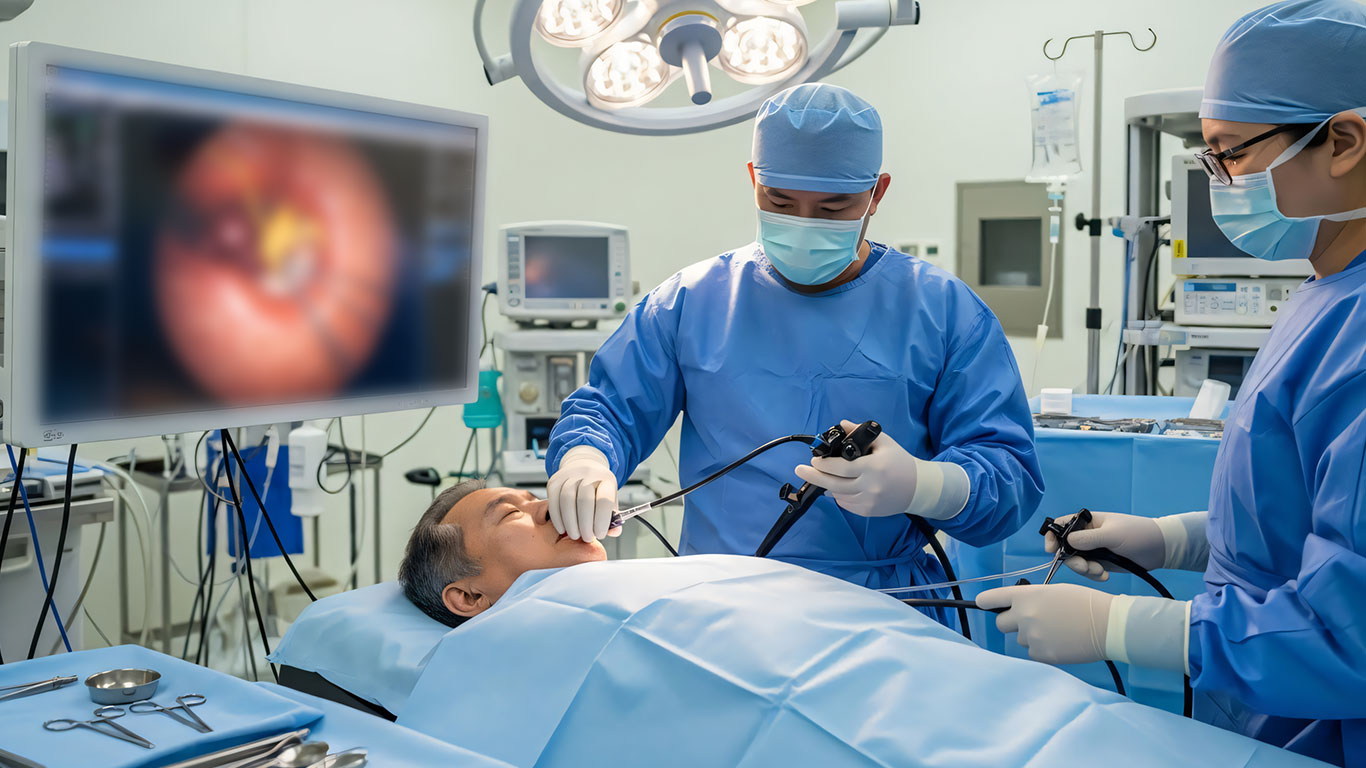
The endoscopic retrograde cholangiopancreatography (ERCP) procedure is a specialised medical technique used to diagnose and treat disorders affecting the bile ducts, gallbladder and pancreatic ducts. It combines endoscopy with fluoroscopic imaging, allowing our specialists to visualise duct structures and perform therapeutic interventions in a single session.
In Singapore, the ERCP procedure patients undergo has become a vital tool for managing biliary obstruction, pancreatitis-related complications and post-surgical issues. As cases of bile duct stones and gallbladder disease increase, ERCP plays an essential role in ensuring timely diagnosis, effective treatment and improved patient outcomes.
The ERCP procedure involves the insertion of a flexible endoscope through the mouth into the stomach and duodenum. Once our specialists reach the bile duct opening, contrast dye is introduced to visualise the bile and pancreatic ducts under real-time X-ray imaging.
While ultrasound, CT and MRCP scans can identify structural abnormalities, they cannot treat blockages or remove stones. ERCP provides both diagnostic insight and immediate therapeutic intervention, making it the preferred approach when:
Due to its dual function, ERCP is reserved for cases where intervention is anticipated, rather than for screening purposes alone.
Before the endoscopic retrograde cholangiopancreatography procedure begins, patients are asked to:
This ensures safety and reduces complications during and after the procedure.
During an ERCP, our specialists will:
This real-time capability makes ERCP indispensable for immediate treatment.
Clear post-care instructions are provided to help patients monitor symptoms and ensure safe recovery.
ERCP is commonly used to diagnose and manage:
ERCP identifies the cause and provides immediate relief of symptoms such as jaundice and severe abdominal pain.
The ERCP procedure is performed in major hospitals and endoscopy centres equipped with:
Complex cases may involve multidisciplinary collaboration with surgeons, radiologists and oncology specialists. Patients may be referred for additional treatment, such as gallbladder removal or tumour evaluation, depending on findings during ERCP.
Non-invasive options include:
These alternatives are used when ERCP is not appropriate or when therapy is not immediately necessary.
Seek medical attention if you experience:
These symptoms may indicate bile duct obstruction or pancreatic issues. Prompt evaluation and referral for ERCP can prevent complications such as sepsis, pancreatitis or organ damage.
ERCP is one effective way to diagnose and treat bile duct conditions. By combining imaging and therapeutic techniques in a single session, the ERCP procedure can offer timely relief and targeted treatment for patients who need it most.
At The Gastroenterology Group, patients benefit from specialist care and access to diagnostic technology, ensuring safe, accurate and coordinated care throughout their ERCP journey. Our gastroenterologists are committed to supporting patients through every step—from assessment to recovery.
If you’re experiencing symptoms such as jaundice, severe abdominal pain or suspected bile duct obstruction, seeking early specialist evaluation is essential. The right diagnosis and timely treatment can significantly improve long-term digestive health and overall quality of life.
Post Tags :
Share :
Book Now
The Gastroenterology Group is a group of gastroenterology and hepatology specialists focused on delivering evidence-based, personalised care.
The Gastroenterology Group is a group of gastroenterology and hepatology specialists focused on delivering evidence-based, personalised care.